How Much Does Tree Removal Cost in NSW?
June 24, 2026
If you've got a tree that needs to come down and you're not sure what you're in for financially, you're not alone. The cost of tree removal in Dubbo varies, sometimes significantly, depending on a handful of factors that are specific to your property and your tree. This tree removal price guide walks through what drives the price, what you can realistically expect to pay, and why choosing a qualified arborist matters as much as the quote itself.
Before pricing up the job, it helps to confirm the tree actually needs to go. You can learn more about the signs your tree may need removing if you're not yet certain.
Why Tree Removal Costs Vary So Much
There's no single figure for tree removal costs in NSW because no two jobs are the same. The price reflects the time, labour, equipment, and risk involved and all of those change depending on what you're dealing with.
Small tree removal in an open backyard is a very different proposition from a large gum overhanging a fence line close to powerlines. Both are tree removals, but the cost, the crew size, the equipment, and the time on site are nothing alike. Understanding what drives the price helps you assess quotes more confidently and avoid being caught off guard.
Tree Size: The Biggest Single Factor
Height and trunk diameter are the most significant drivers of tree removal cost. Larger trees require more time to dismantle, heavier equipment to manage safely, and more labour to clear the debris. As a general guide:
· Small trees under five metres: from around $300–$600
· Medium trees five to ten metres: typically $600–$1,500
· Large trees ten to twenty metres: generally $1,500–$3,500
· Very large trees over twenty metres: $3,500 and upward, depending on complexity
These are indicative ranges only. The figures above assume reasonably straightforward access and conditions; the other factors below can push the final cost higher.
Access and Site Conditions
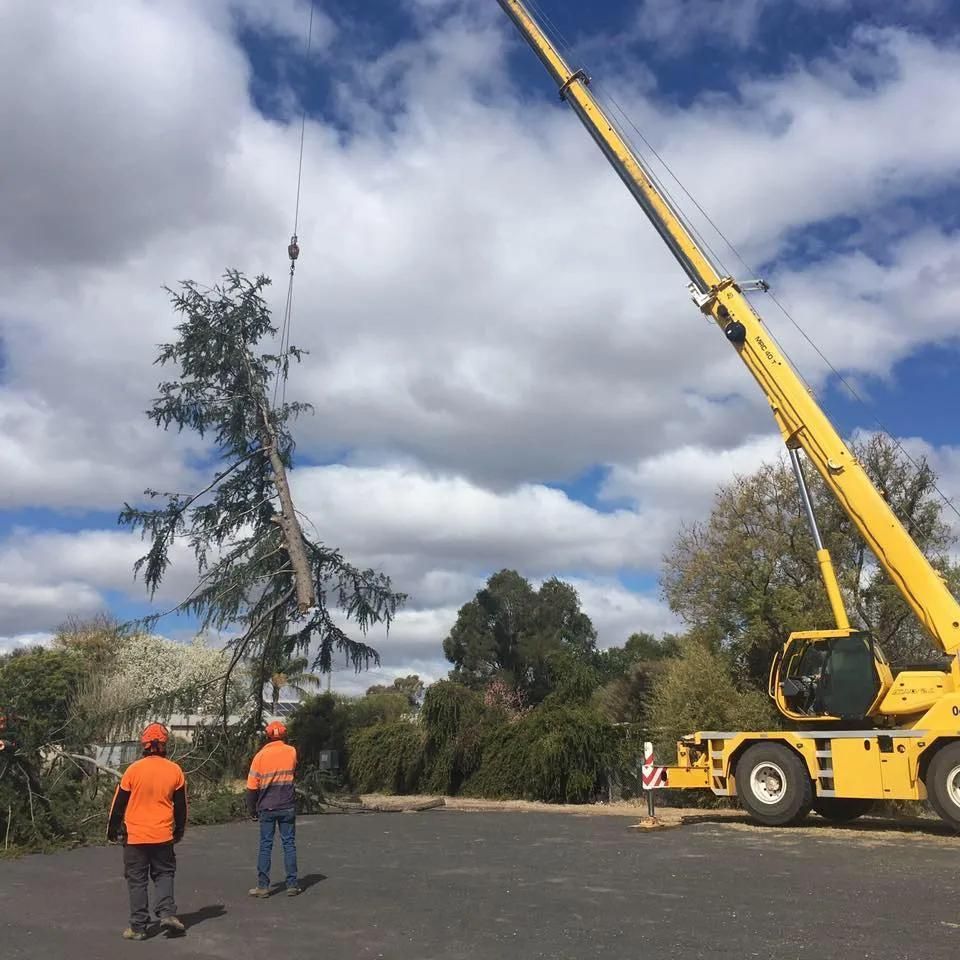
How easily a crew and their equipment can get to the tree has a significant impact on cost. A tree in an open yard with good vehicle access is straightforward. A tree in a confined space, behind a narrow gate, on a steep block, or close to a structure requires more careful work, often involving hand cutting, rigging, and lowering sections piece by piece rather than felling in one go.
Rural and semi-rural properties often have good access for heavy equipment, which can keep costs lower than comparable jobs in more densely built urban areas. That said, trees close to sheds, fences, or irrigation infrastructure on rural blocks introduce their own complications.
Species and Timber Hardness
The species of tree affects how long the job takes and what equipment is needed. Softwood trees are faster to cut and process than dense hardwoods, which blunt chainsaw chains more quickly and take longer to break down. Some species also have specific characteristics that add complexity, such as large spreading canopies, brittle limbs that require extra care, or root systems that extend well beyond the tree's drip line.
Native species in the region, including ironbarks, grey boxes, and various eucalypts, are generally dense hardwoods. If you're dealing with a mature native tree, factor that into your expectations around pricing.
Proximity to Structures, Fences, and Powerlines
The closer a tree is to something that can be damaged, the more carefully and methodically it needs to be removed. Work near powerlines must be carried out in coordination with the relevant network provider and may involve additional safety requirements that add to the overall cost. Trees that overhang rooflines, fences, or neighbouring properties require a level of precision and rigging that open-site removals don't.
This is where the difference between a qualified arborist and a tree lopper becomes financially relevant as well as safety-relevant. An arborist trained in rigging and climbing techniques can safely dismantle a tree in sections close to a structure. A tree lopper attempting the same job without that training is a liability risk that can end up costing far more than the savings.
Does Stump Grinding Affect the Total Cost?
Yes, and it's worth factoring in from the start. Tree removal typically covers felling and clearing the above-ground material, but the stump remains unless you specifically request it to be ground out. Many homeowners also ask about stump grinding at the same time, which can affect the overall project cost but also prevents regrowth, eliminates a trip hazard, and frees up the space for lawn, planting, or paving.
Stump grinding is generally priced by diameter and ranges from around $150–$400 for a standard stump, with larger or more complex stumps costing more. Combining it with the removal in a single job is often more cost-effective than booking it separately.
Council Permits and Protected Trees
In NSW, many trees are protected under local council Tree Preservation Orders (TPOs) or Development Control Plans (DCPs). Removing a protected tree without approval can result in significant fines. Regional councils have their own guidelines around which trees require approval before removal, and the process of obtaining that approval including any arborist reports required, may add to the overall cost and timeline.
A qualified arborist can assess whether your tree is subject to any protection orders, prepare the necessary documentation, and liaise with council on your behalf. This is another area where working with a professional from the start is considerably less expensive than dealing with compliance issues after the fact.
Arborist vs Tree Lopper: Why It Matters for Your Quote
When comparing quotes, it's worth understanding who you're actually comparing. A qualified arborist holds formal qualifications in arboriculture, carries appropriate insurance, and follows Australian standards for tree removal. A tree lopper may be cheaper on paper but typically lacks the training, equipment, and insurance for complex jobs — and any damage to property, injury, or compliance issue becomes your problem.
For tree removal Dubbo homeowners can rely on, the right question isn't just what does it cost — it's whether the person doing the job has the qualifications and insurance to back up their work.
Get an Accurate Quote Before You Commit
Every tree removal job is different, and the only reliable way to get a figure you can plan around is an on-site assessment by a qualified arborist. Online calculators and rough estimates over the phone can give you a ballpark, but they can't account for the specifics of your tree, your block, or any council requirements that apply.
Here at A1 Tree Services NSW, we're a Dubbo-based team of qualified arborists and members of Arboriculture Australia, servicing Dubbo and across the Central West. We provide free, no-obligation quotes on all tree removal work, and we'll walk you through exactly what's involved and why before any work begins. If you're ready to move forward, and find a Dubbo tree service, get in touch with A1 Tree Services for a free quote.