How Weather And Storm Damage Can Make Tree Removal Urgent
A1 Tree Services NSW • May 18, 2026
A single storm can change everything, a tree that stood for decades can become a splintered hazard overnight. For property owners across regional New South Wales, this is not a hypothetical. Storms roll through with little warning, and the structural damage they leave behind can be far more serious than a few fallen branches. Property owners who've called on tree services in Dubbo after major storms will recognise the pattern: high winds, saturated soil and lightning strikes create conditions where even healthy-looking trees become unpredictable. This blog walks through why storm-damaged trees demand immediate attention, what warning signs to look for and how professional emergency tree removal can restore safety to your property.
When Storms Compromise More Than Just Branches
A major storm does not simply snap branches — it can fundamentally alter a tree's structural integrity, sometimes in ways that are not immediately visible. The real danger often lies beneath the surface, where root systems have shifted, cracked or been waterlogged to the point where the tree can no longer support its own weight.
Storm damage compromises trees in several ways:
- Root uplift, where the base of the tree visibly rises from the ground
- Bark splitting or trunk cracking caused by lightning or wind shear
- Crown damage that shifts the tree's weight distribution unevenly
- Soil erosion beneath the root system, reducing stability
The Difference Between a Damaged Tree and a Dangerous One
Not every tree that takes a hit in a storm needs to come down straight away, but some do — and telling the difference matters. A certified arborist can assess whether a tree has been structurally compromised beyond recovery or whether targeted pruning and cabling can extend its safe lifespan.
Key indicators that a tree has crossed into dangerous territory include:
- Visible lean that was not present before the storm
- Hanging or partially attached limbs suspended in the canopy
- Deep cracks running vertically through the main trunk
- Exposed root plate or raised soil around the base
- Bark that has completely separated from the trunk
Why Healthy Trees Are Not Always Safe After a Storm
One of the more counterintuitive aspects of storm damage is that a tree can appear healthy on the outside while being critically weakened underneath. Internal decay, hollowing and root damage are not always obvious from street level, which is why a visual check alone is rarely enough after severe weather.
A professional assessment goes beyond the surface:
- Probing for soft or hollow sections within the trunk
- Evaluating root zone stability through soil and ground inspection
- Checking for fungal growth, which often signals internal decay
- Reviewing the tree's species-specific vulnerability to wind loading
- Identifying whether previous damage has compounded the risk
What to Do Immediately After a Storm
The hours following a storm can be chaotic, but taking a measured approach to your property can prevent further injury or damage. Rushing to clear debris without assessing overhead hazards is one of the most common mistakes property owners make.
A safe post-storm response involves these steps:
- Stay clear of any tree or branch that is visibly leaning, cracked or entangled in powerlines
- Contact your electricity provider if trees are in contact with any lines
- Document damage with photographs before anything is moved or cleared
- Avoid walking under trees with suspended limbs, even if they appear stable
- Call a licensed tree services professional to conduct a site assessment before any manual clearing begins
How Emergency Tree Removal Works in Practice
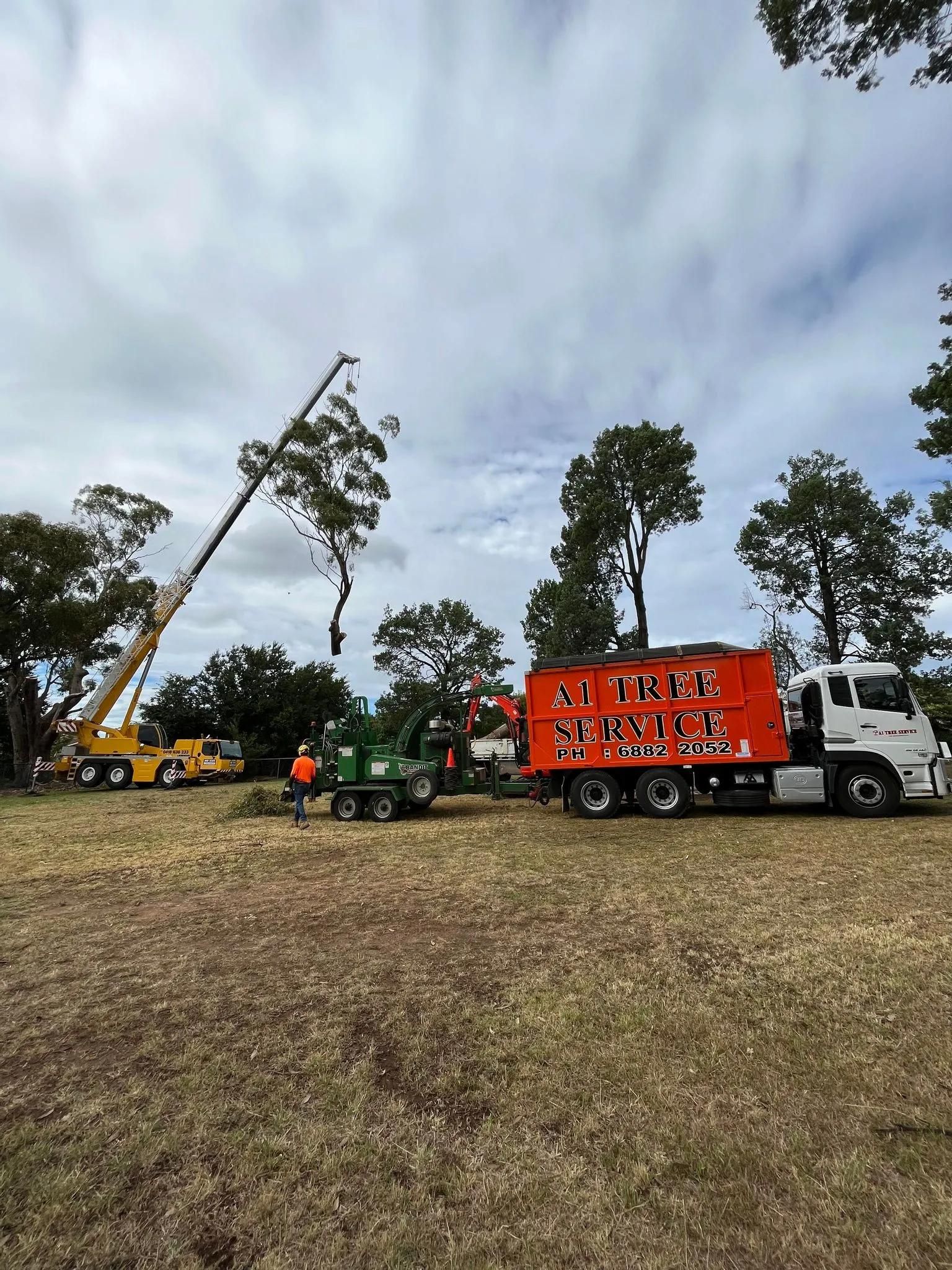
Emergency tree removal is not simply a faster version of a standard job — it requires a different approach, different equipment and a higher level of on-site problem solving. When a tree has partially fallen, is resting against a structure or is tangled with powerlines, the work becomes significantly more technical.
An emergency removal typically involves:
- A rapid site assessment to identify all risk factors before work begins
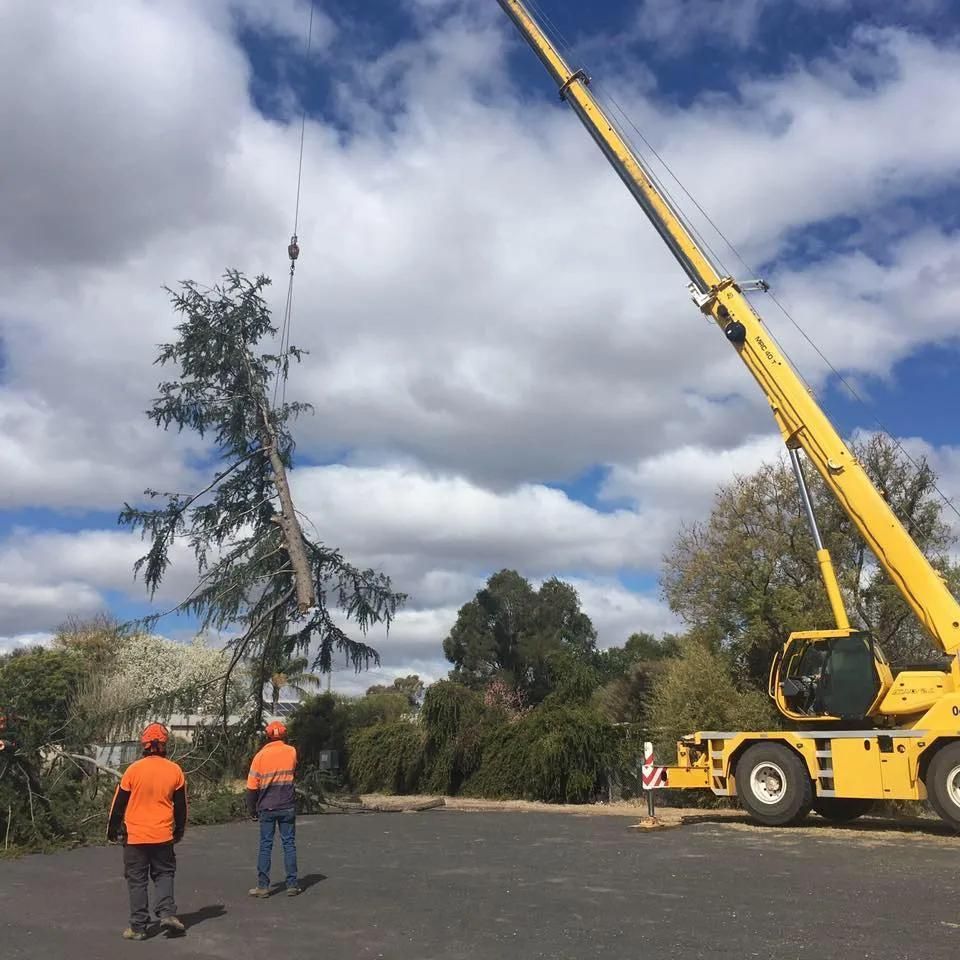
- Use of specialised rigging and lowering systems to control how sections are brought down
- Coordination with utility providers when powerlines are involved
- Stump grinding or root removal where the base remains a tripping or regrowth hazard
- Debris removal and site clean-up once the tree is safely down
The Role of Preventative Care in Reducing Storm Risk
Emergency work is often unavoidable after a severe storm, but many of the callouts arborists respond to could have been reduced with earlier intervention. Trees that are regularly inspected, pruned and monitored are far less likely to fail catastrophically during a storm event.
Preventative tree care includes services such as:
- Crown thinning to reduce wind resistance in large canopy trees
- Removal of dead wood and weak limbs before storm season
- Structural pruning to promote balanced, stable growth
- Cable and bracing systems for trees with co-dominant stems or existing splits
- Root zone assessments for trees near structures, footpaths or kerbs
When Tree Removal Is the Only Safe Option
There are situations where no amount of pruning, cabling or monitoring can make a tree safe to keep. This is not a failure — it is a practical outcome of storm damage that has gone beyond what remediation can address. Recognising this early saves time, money and potential harm down the track.
Removal becomes the clear recommendation when:
- The tree has lost more than half of its crown to storm damage
- The root system has been significantly uplifted and cannot be re-established
- The trunk shows deep structural cracking or complete bark separation
- The tree is located near a dwelling, fence or kerb and poses an ongoing falling risk
- Multiple storm events have accumulated damage over time
Understanding the Risk of Leaving Damaged Trees Unattended
Leaving a storm-damaged tree in place is not a neutral decision. Over time, weakened trees deteriorate further — wood dries out and becomes more brittle, root systems continue to destabilise and any subsequent wind event, even a mild one, can cause the tree to fail without warning.
The risks of delayed action include:
- Progressive structural decline that becomes more complex and costly to address
- Increased liability exposure if the tree damages property or injures someone
- Secondary pest and disease entry through storm wounds left untreated
- Reduced options for treatment as damage becomes more entrenched
- Greater disruption to the surrounding landscape if the tree eventually falls rather than being removed under control
Protecting Your Property With Professional Guidance
No two storm events are the same, and no two trees respond to damage identically. That is why a one-size-fits-all approach to post-storm tree care rarely produces the best outcome. Working with qualified arborists who understand local conditions, species and risk factors gives property owners a much clearer picture of what they are dealing with — and what to do about it.
Professional tree services provide:
- Arborist reports and written assessments for insurance and council purposes
- Recommendations tailored to the specific tree, site and storm event
- Safe, compliant removal methods that meet Australian Standards
- Advice on replanting and long-term canopy management post-removal
- Coordination with councils where trees are subject to local vegetation protections
Ready to Restore Safety After the Storm?
We at A1 Tree Services NSW understand that storm damage does not wait for convenient timing, and Dubbo property owners often face the added challenge of fast-moving weather events with limited warning. Whether you need an urgent assessment, emergency removal or longer-term care advice, our team is ready to help. Contact us today to book an inspection or speak with one of our qualified arborists — we will help you understand exactly what your trees need and get your property back to a safe, manageable state.